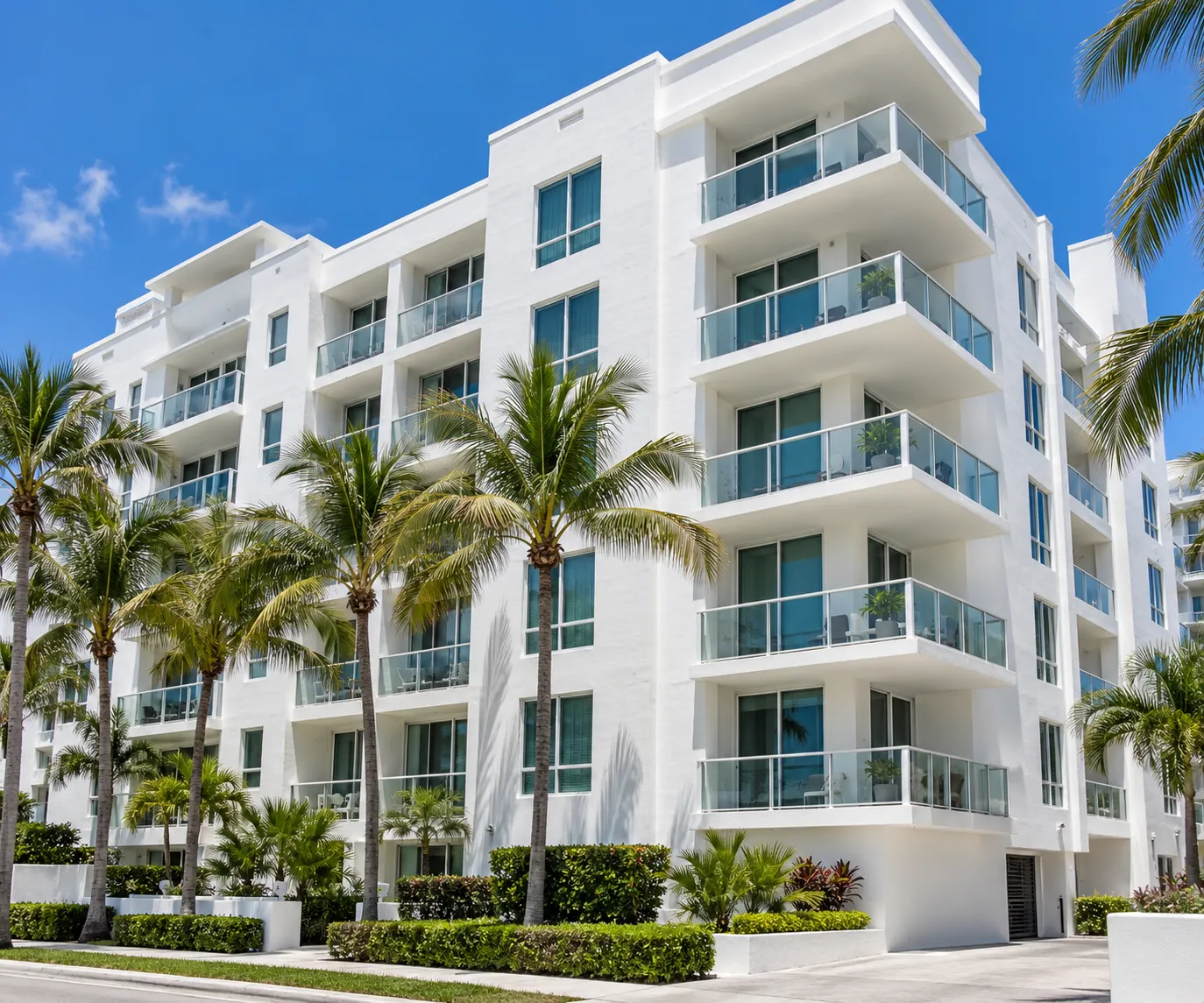
Before you build
Facade restoration for condo buildings: what boards ask
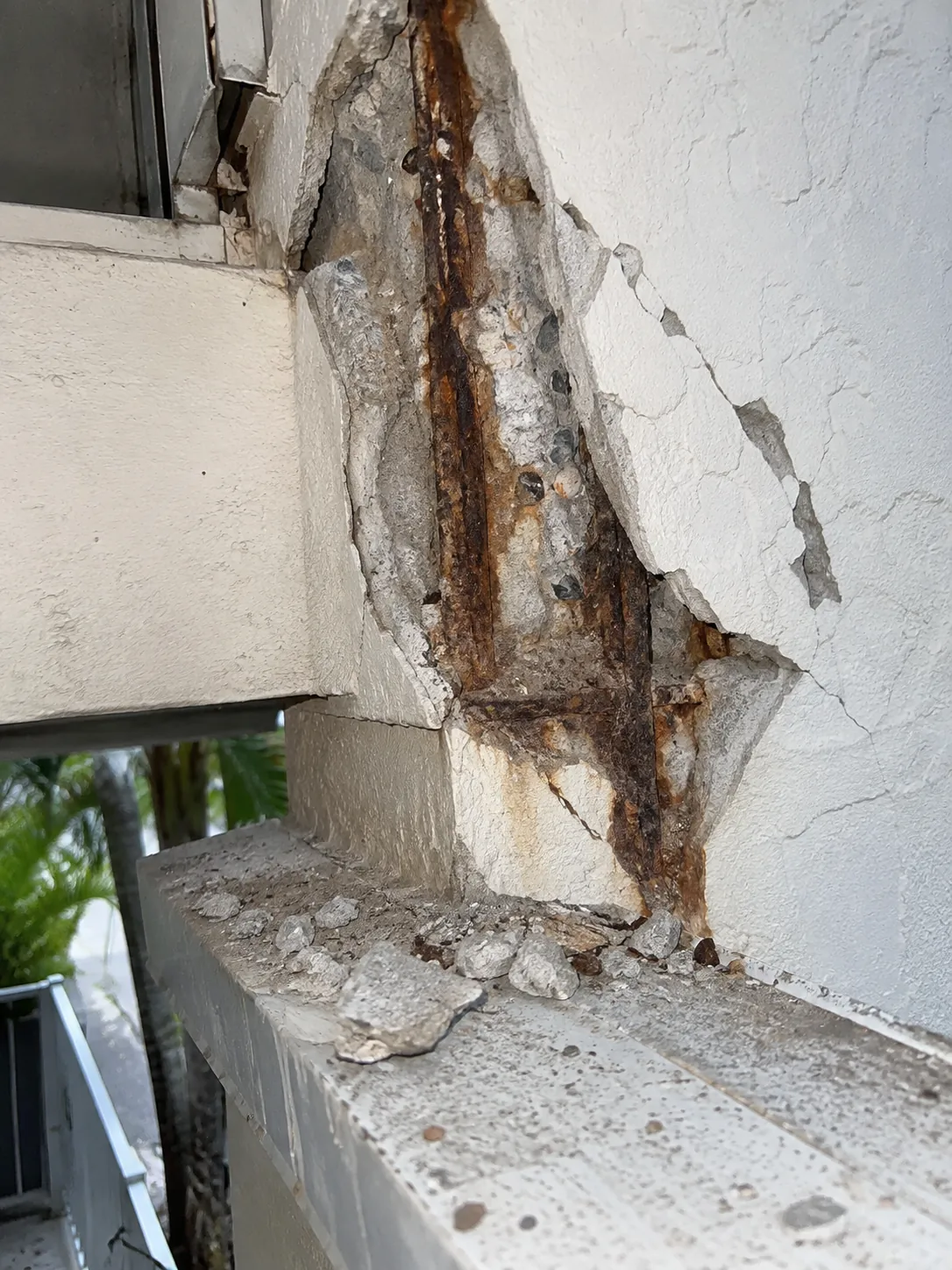
What is concrete spalling?
Concrete breaking away because the steel inside it is rusting and expanding. It shows as cracks, rust stains and pieces falling off, often at balcony edges and columns.
Why does it happen so much in Miami?
Salt air, rain and humidity. Coastal buildings are exposed constantly, and older buildings often have less concrete cover over the steel.
Do we need an engineer?
For structural concrete repairs, yes. Many buildings already have an inspection report that lists the repairs; the work is done to that report and its specifications.
What drives the cost?
The number and size of repairs, access to the facade, sealant replacement and the coating. Repairs are measured and itemized so the board can follow them.
How are residents affected?
Work moves by elevation or stack, with notices, balcony access scheduled and areas below protected.
How are the areas below protected during the work?
Sidewalks, entrances, pool decks and parked cars below the work zone are protected or closed off, with covered walkways where residents need to pass. Debris is contained at the work level and lowered, never dropped.
How do we choose a facade restoration contractor?
Ask how many occupied buildings they have restored, how they work from an engineer's report and how they price repairs found during the work. Facade work happens over residents' heads and windows, so ask also how they protect the areas below and communicate with residents.
Look for a contractor who documents every repair location. Facade work is mostly hidden once it is painted, and the documentation is what proves it was done.
How should the board compare facade bids?
Bids should be based on the same engineer's report and the same repair quantities. Because the true extent of damage is only known once surfaces are sounded and opened, most bids price repairs by unit: per area of concrete repair, per length of crack, per sealant joint.
Compare those unit prices, not just the total based on estimated quantities. The final cost depends on the real quantities, and the bid with the lowest total and the highest unit prices can end up the most expensive.
How is the work documented?
Each repair is located on drawings of the elevations, photographed before and after and recorded with its quantity. The engineer reviews the repairs as the work progresses, according to what the engineer's scope requires.
At the end the association has a record of every repair: where, what kind and how much. That record supports the final payment, answers owner questions and helps the next engineer who inspects the building.
Can facade work be phased over budget years?
Sometimes, depending on what the engineer's report says is urgent and what can wait. Repairs the engineer flags as a safety concern are not a candidate for delay, and that is a decision for the engineer and the association.
When phasing is possible, the work is usually split by elevation, with the same products and colors so the building matches when it is complete. Each phase has its own schedule, notices and documentation.
What about salt air and coastal exposure?
Salt is one of the main reasons concrete reinforcement corrodes in Miami. Buildings close to the water, and elevations facing the wind, usually show more damage and need more attention.
Repair materials, coatings and sealants are selected for that exposure, following the engineer's specifications. After the restoration, a good paint and sealant system is part of keeping water and salt out of the concrete.
What happens after the restoration is complete?
The association receives the repair documentation, product information, color codes and warranty information. The engineer issues whatever closing documents the engineer's scope calls for.
We recommend a simple visual check of the building at regular intervals: sealants, cracks, rust stains and balcony edges. Catching a crack or a failed joint early is much cheaper than another round of concrete repair.
How do we keep residents informed during facade work?
Residents want to know three things: when crews will be outside their windows, when their balcony is closed and how loud it will be. Management sends notice by elevation and stack before each phase, with those answers.
Concrete removal is the loudest part, and we keep it within the building's work hours. When a balcony has to be closed for repairs, the owner gets the dates in advance and the balcony is reopened as soon as the work there is done.