FF BuildersFF Builders
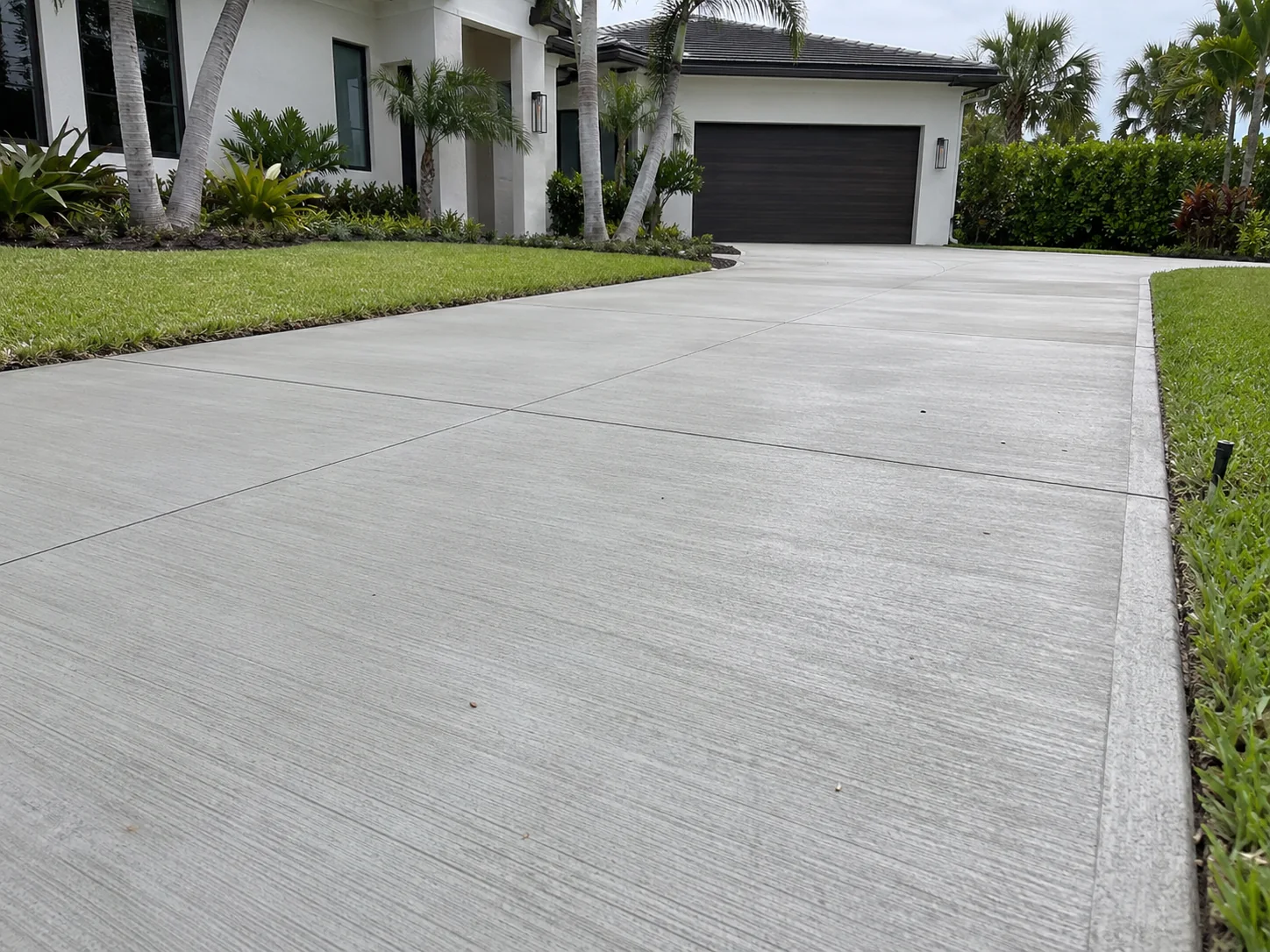
Finished concrete driveway with broom finish and saw-cut control joints at a Miami home
Trusted across Miami-Dade & Broward

Concrete contractor in
Miami & Fort Lauderdale.

Driveways, patios and stamped concrete, and the structural side most concrete companies do not touch: footings, foundations, slabs and load-bearing beams. Poured by a Florida certified general contractor, permitted and inspected.

Google5.0★★★★★Licensed Florida GCPermits handledFree estimates

Get your free estimate

No obligation. We'll call you back fast with a straight answer.

Or call now: (954) 249-6940

Licensed Florida GCPermits & inspectionsOne point of contactSchedule held
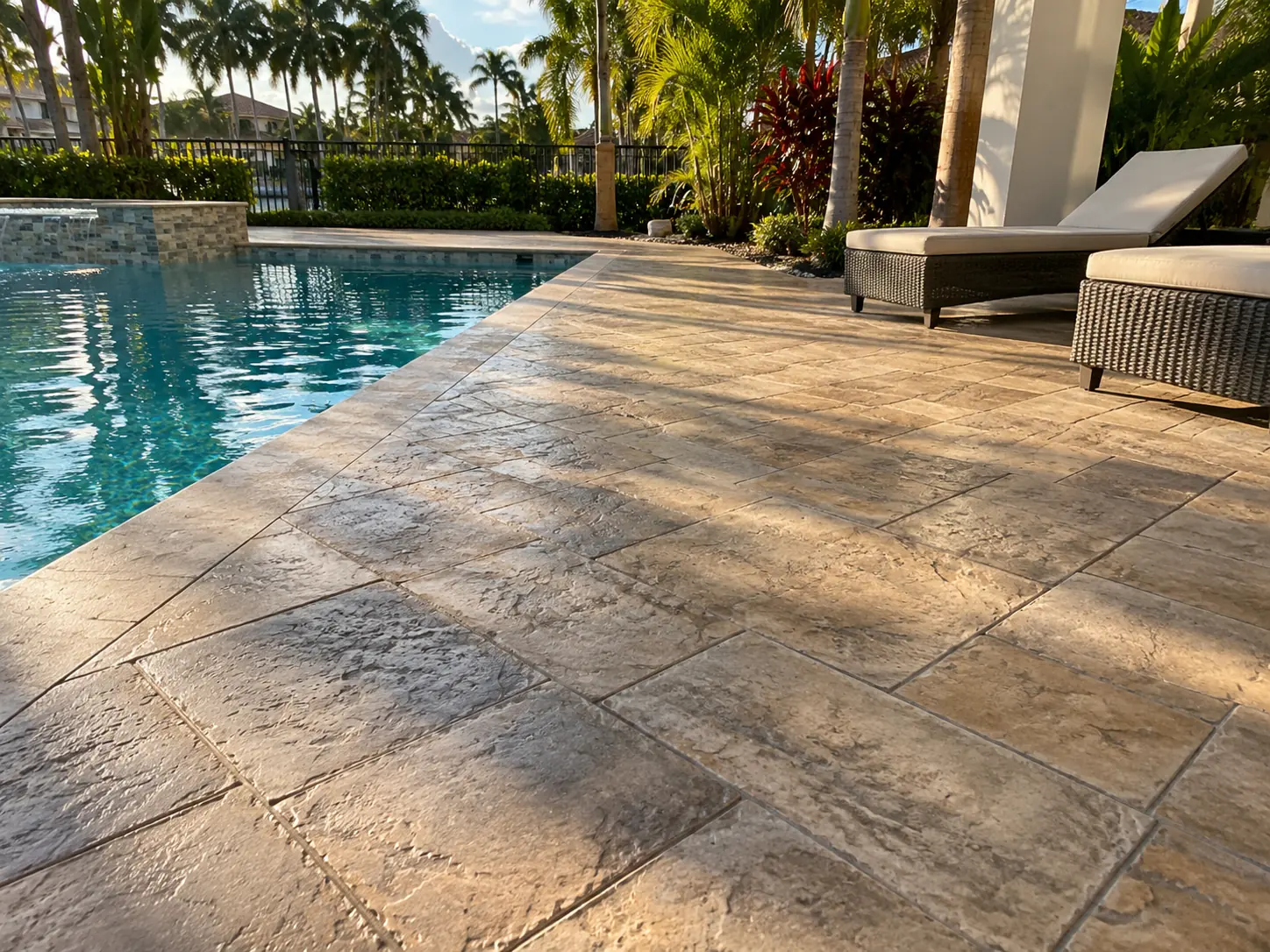
Stamped concrete pool deck in Miami, colored and textured to read as cut stone

The short version

Most concrete contractors pour flat. We also pour what carries load.

Driveways, patios and pool decks are the visible half of the trade and we do that work. The other half is footings, grade beams and structural slabs, and that side needs engineering, a permit and an inspector signing off before anything gets covered. Most companies that pour a driveway do not touch it.

We hold a Florida certified general contractor license, number CGC1524051, which is what lets the same crew pour your pool deck on Tuesday and the footing for your addition on Thursday, both legally and both inspected.

What we pour

Flat work and structural,
by one licensed crew.

Concrete driveways

Tear out the old slab, grade and compact the base, set the forms and the mesh, pour and cut the control joints where they belong so the slab cracks on the line instead of across the middle.

Patios and pool decks

Broom finish, salt finish or a smooth trowel, sloped away from the house and away from the pool so water goes where it should. Coping and deck drain when the job calls for it.

Stamped and decorative concrete

Stamped, colored and scored concrete that reads as stone or paver at a fraction of the cost. Sealed properly, because in this sun an unsealed decorative slab fades in two seasons.

Footings and foundations

Engineered footings, grade beams and monolithic slabs for additions and new structures. Formed, tied and poured to sealed drawings, inspected before anything goes on top.

Structural slabs and tie beams

Concrete tie beams, columns and structural slabs: the poured work that carries load. This is the side that separates a general contractor from a concrete company, and the side an inspector looks at hardest.

Concrete repair and restoration

Spalling where rebar rusted and expanded, cracked slabs, failing balcony edges and the concrete restoration a structural inspection required. Common on buildings past the forty-year mark here.

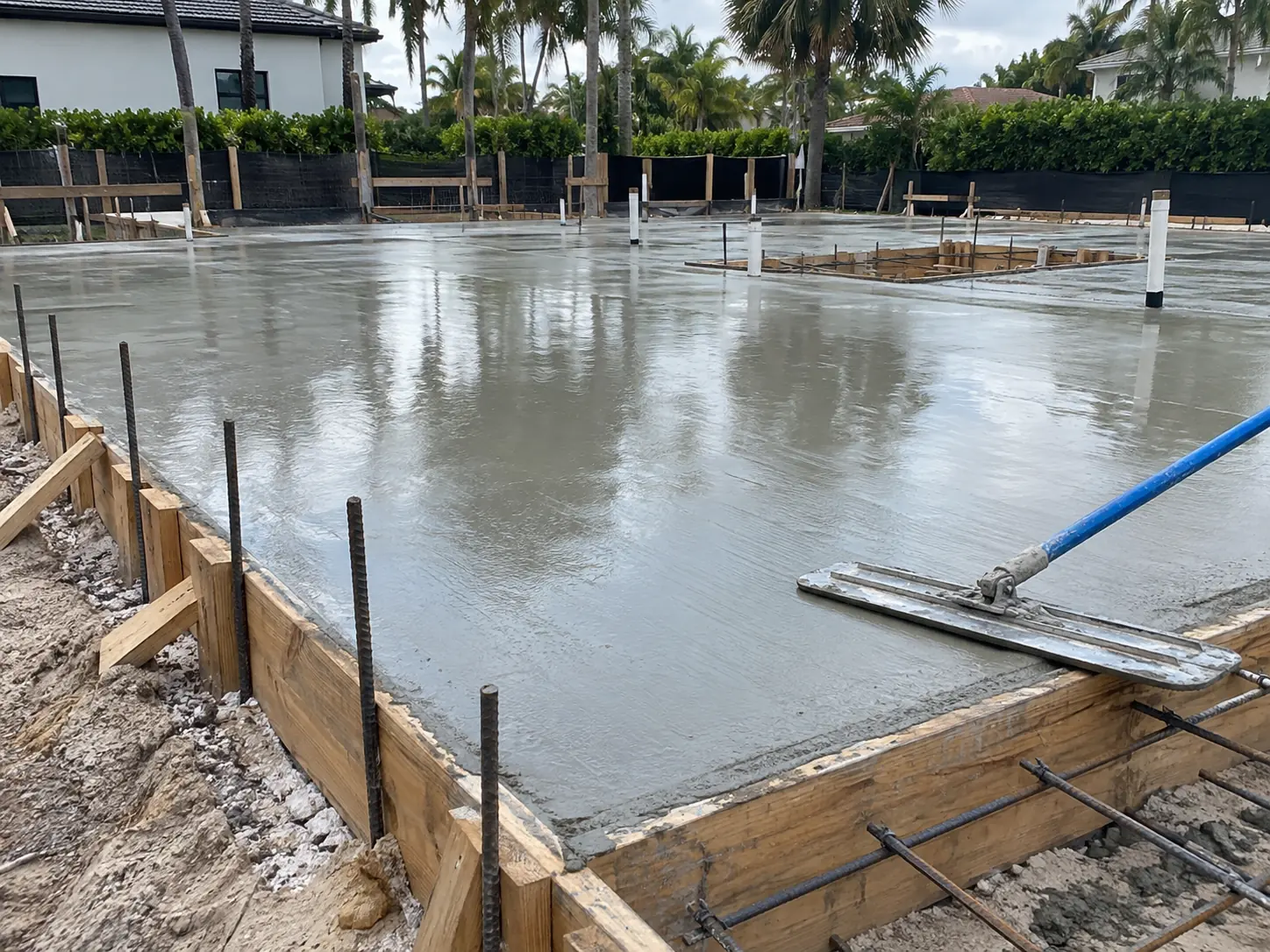
Concrete slab being floated on a Miami job site, forms and tied rebar at the perimeter

The part nobody redoes cheaply

Concrete poured in the wrong place stays there.

Cabinets get replaced and paint gets redone. A footing poured too shallow, a grade beam without the steel the engineer called for, a slab tied into the existing structure the wrong way: none of that gets fixed without breaking it out. Florida licenses this work for exactly that reason.

Anything that carries load has to be engineered, permitted and inspected before it is covered. We pull it in our own name, with the sealed drawings on record, so the work is documented and the property is clean at resale.

  • Engineer sizes the footing and the steel, we do not guess
  • Permit pulled in our name, not yours
  • Inspected with the rebar exposed, before the pour
  • Closed permit stays on the property record

How it works

Concrete is unforgiving, so the prep is the job.

Almost every concrete failure people call us about traces back to what happened before the truck arrived. Base not compacted, joints not cut, steel in the wrong place. The pour itself is the easy part.

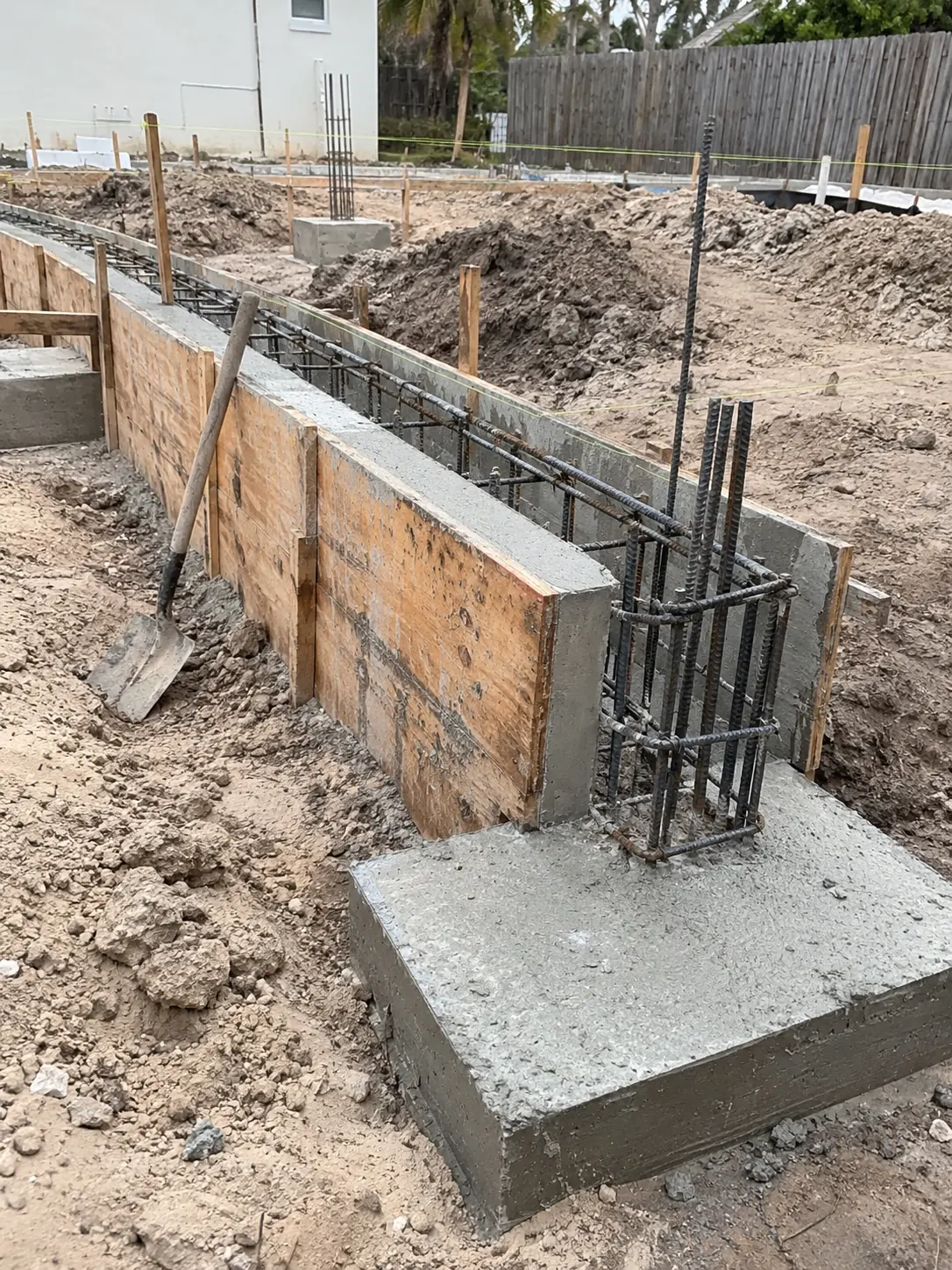
Concrete footing and grade beam formed with tied rebar before the pour

Forms set to line and grade, base compacted, steel tied with the right cover. Almost every concrete failure people call us about traces back to this stage, not to the pour.

  1. We look at the groundWhat is under the slab decides how long it lasts. Fill, roots, soft spots and how the water runs across the lot all change the approach.
  2. Engineering, when it carries loadFlat work does not need it. Footings, beams and anything structural do, and the sealed drawings are what the county reviews.
  3. Permit and inspection schedulePulled in our name. Structural pours get inspected before concrete goes in, which means the schedule is built around inspector availability, not around us.
  4. Forms, base and steelBase graded and compacted, forms set to line and grade, rebar or mesh tied with the right cover. This is where a slab is won or lost.
  5. Pour and finishPoured, screeded, floated and finished to the surface you chose, with control joints cut on time so the slab cracks where we put the line.
  6. Cure and sealConcrete gains strength for weeks, and in this heat it needs to be kept wet early. Decorative work gets sealed once it has cured, not the same afternoon.

Homeowners

One team that
owned the whole thing.

5.0
★★★★★
22 Google reviews · every one of them five stars
Google
K Kelsey BarbosaGoogle review Google
★★★★★

We had a great experience using FF Builders. Their team communicated clearly throughout the length of our project. We never had to worry about a single detail. I would highly recommend using them for your project.

S sara bouGoogle review · Local Guide Google
★★★★★

Best service ever! They take care of every detail! Always on time, everything came up as I wanted. Thank you!

M Monica BecharaGoogle review · Local Guide Google
★★★★★

They are the best! Everything was perfect. Super responsible, reliable and always on time. I recommend them 100%.

Google Business Profile rating recorded September 25, 2026. Read them on Google.

What we install

Every opening in the house,
not just the windows.

Impact windows

Single hung, horizontal roller, casement, awning, picture and fixed. All carrying a Miami-Dade NOA that covers your design pressure, which changes with how high the opening sits and how exposed the wall is.

Sliding glass doors

The largest opening in most South Florida houses and the one that decides whether the envelope holds. Two, three and four panel, with pocket and stacking configurations.

French and entry doors

Impact-rated swing doors with the same laminated glass and the reinforced frame and hardware the approval requires. A beautiful door with an unrated frame protects nothing.

Full window replacement

Removing the old frame down to the opening rather than setting a new window inside the old one. It costs more and it is the only way the anchoring meets the approval.

Structural openings

When the new opening is wider than the old one, that is a beam and an engineer, not a window job. We handle both, which most window companies cannot.

Permits and product approval

The NOA package, the permit application, the inspection and the closeout. This is the part that makes the insurance credit real and it is where most cheap installs fall apart.

What it costs

Square footage is the smallest
part of the number.

Two driveways of the same size can differ by half, and it is almost never the concrete itself. Four things move the price.

  1. What has to come out firstDemolition and haul-off of an existing slab, and what is found underneath. Roots, fill and soft ground all have to be dealt with before anything is poured.
  2. Thickness and steelA patio, a driveway that takes a car and a driveway that takes a truck are three different slabs. Thickness, mesh or rebar and the base under it are set by what will drive on it, not by preference.
  3. FinishA broom finish costs what concrete costs. Stamped, colored and scored work is labor on top, plus sealer, plus resealing every few years to hold the color in this sun.
  4. Whether it carries loadFlat work is flat work. The moment it is a footing, a beam or a structural slab, it brings an engineer, a permit and inspections, and that is a different job at the same cubic yards.

We measure on site, put the scope and the finish in writing, and what is on the signed proposal is what you pay. We will also tell you when a job does not need us: some slabs are better repaired than replaced, and saying so up front is cheaper for both of us.

Before you hire anyone

The ones people actually ask.

Do concrete contractors need to be licensed in Florida?

For structural work, yes, and for most work that requires a permit. Florida licenses contracting, and concrete that carries load falls squarely inside it. Flat work like a patio sits in a greyer area depending on the municipality, which is exactly why plenty of people pouring driveways here are not licensed. We hold a Florida Certified General Contractor license, number CGC1524051, which covers both sides. Ask for the license number and the certificate of insurance before anyone pours anything on your property.

Can a general contractor pour concrete?

Yes, and it is broader than the reverse. A certified general contractor can do flat work and structural concrete, pull the permits for both and self-perform or subcontract. A concrete company without a contractor license can pour your driveway but cannot legally handle a footing for an addition. That is the practical difference when a job turns out to be bigger than it looked.

How much does a concrete driveway cost in Miami?

It depends on what comes out first, what is underneath, how thick the slab has to be and what finish you want. Demolition of an existing driveway and hauling it away is often a meaningful part of the number before a single yard is poured. We measure on site and put it in writing rather than quoting a price per square foot that changes once we see the ground.

How long before I can drive on new concrete?

Walk on it after 24 to 48 hours, park a car after about a week, and keep heavy trucks off for 28 days, which is when concrete reaches its design strength. It keeps gaining strength for much longer. Anyone telling you to drive on it in three days is not the one paying to replace it.

Why does concrete crack, and is my slab bad?

All concrete cracks. That is why control joints exist: they are a planned weak line so the slab cracks where we cut it instead of across the middle. A hairline crack along a joint is the system working. A crack that is wide, offset in height or growing is a different conversation, and usually about what is under the slab rather than the concrete itself.

Stamped concrete or pavers?

Stamped costs less and gives you a continuous surface with no joints for weeds. Pavers cost more, can be lifted and reset if something settles or a pipe needs work, and never need resealing for color. In this sun, stamped work needs resealing every few years or the color goes flat. Neither is wrong, and we install both.

Do you do concrete repair, or only new pours?

Both. A lot of our concrete work in Miami-Dade and Broward is restoration: spalling where rebar rusted and pushed the concrete off, cracked slabs, failing balcony edges and the repairs a structural inspection called for on an older building. Repair is often the right answer, and on a building past forty years it is frequently what the county is asking for.

Also from us

One licensed contractor,
the whole house.

General contracting

Permits pulled in our name, every trade sequenced and the inspections closed out. One number to call when the job is bigger than the slab.

Home remodeling

The house emptied and put back: layout, kitchen, baths, floors and finish, on one contract and one schedule.

Impact windows and doors

Hurricane-rated windows and sliding doors with Miami-Dade NOA approval, permitted and inspected.

Kitchen remodeling

Cabinets, stone and the electrical and plumbing that move when the layout changes.

Bathroom remodeling

Waterproofing done right, tile set level, and the plumbing that decides whether it lasts.

Flooring and stone

Large-format porcelain, marble and travertine, measured at your house before anyone writes a number.

Painting and drywall

Interior and exterior finish, wall texture and the prep that decides how a coat ages here.

Marble and stone

Marble, travertine and natural stone on floors, walls and countertops, cut to the room.

Carpentry and millwork

Custom cabinetry, closets and built-ins, trim, crown molding and wood ceilings.

Free estimate

Get the slab
measured and priced.

We come out, look at the ground, tell you what has to come out first and put the scope and the finish in writing. No pressure, no obligation.