Before you build
Soundproof flooring in condos: what owners ask
Why do condos require sound underlayment?
Because hard floors transmit impact noise to the unit below. Associations set a minimum performance in their renovation rules to protect neighbors.
What do IIC and STC mean?
They are ratings for sound transmission through a floor and ceiling assembly. IIC measures impact noise like footsteps; STC measures airborne noise like voices. Higher numbers mean less sound gets through. Your building's rules say which ratings it requires.
Can I install porcelain tile in my condo?
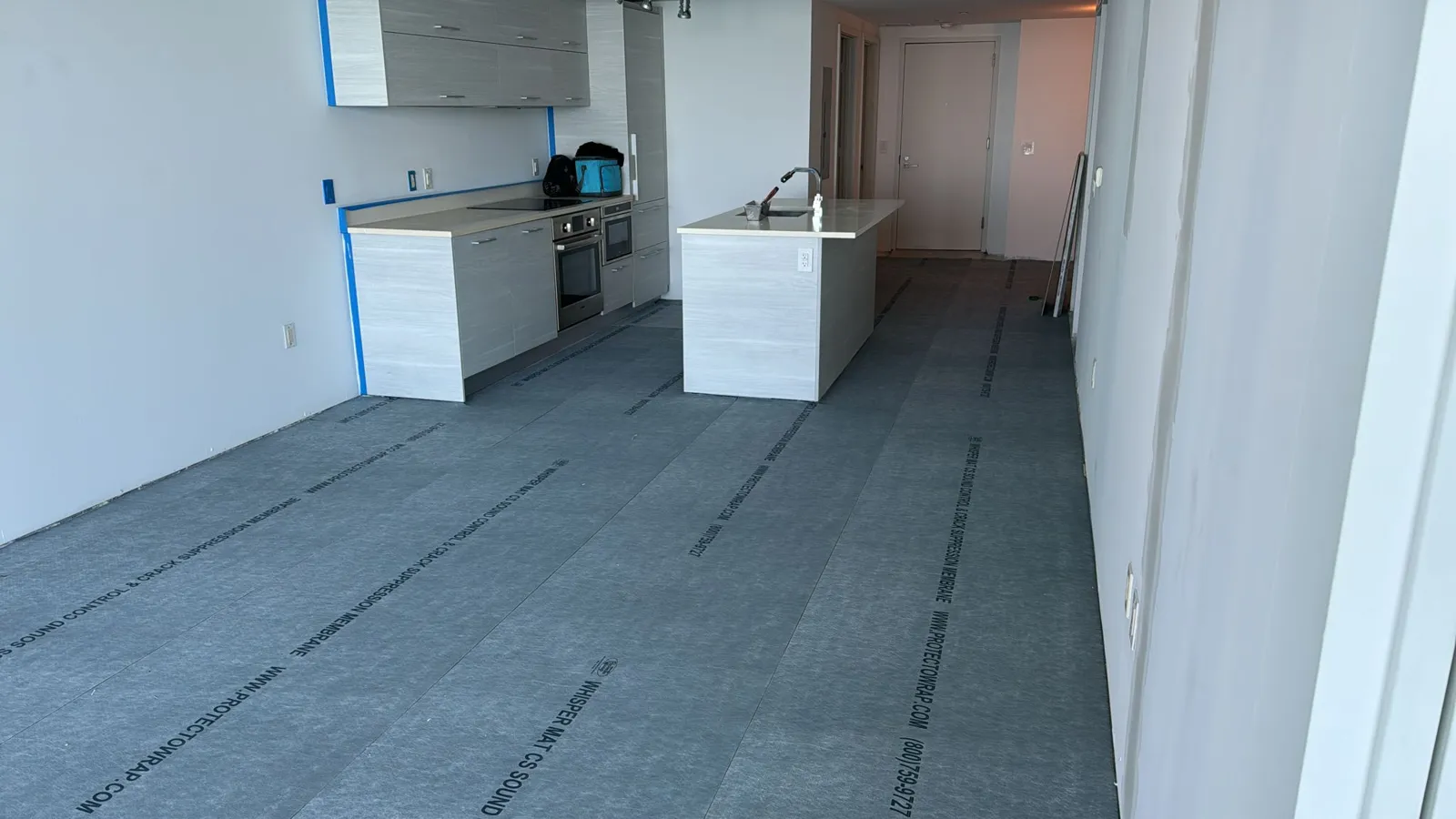
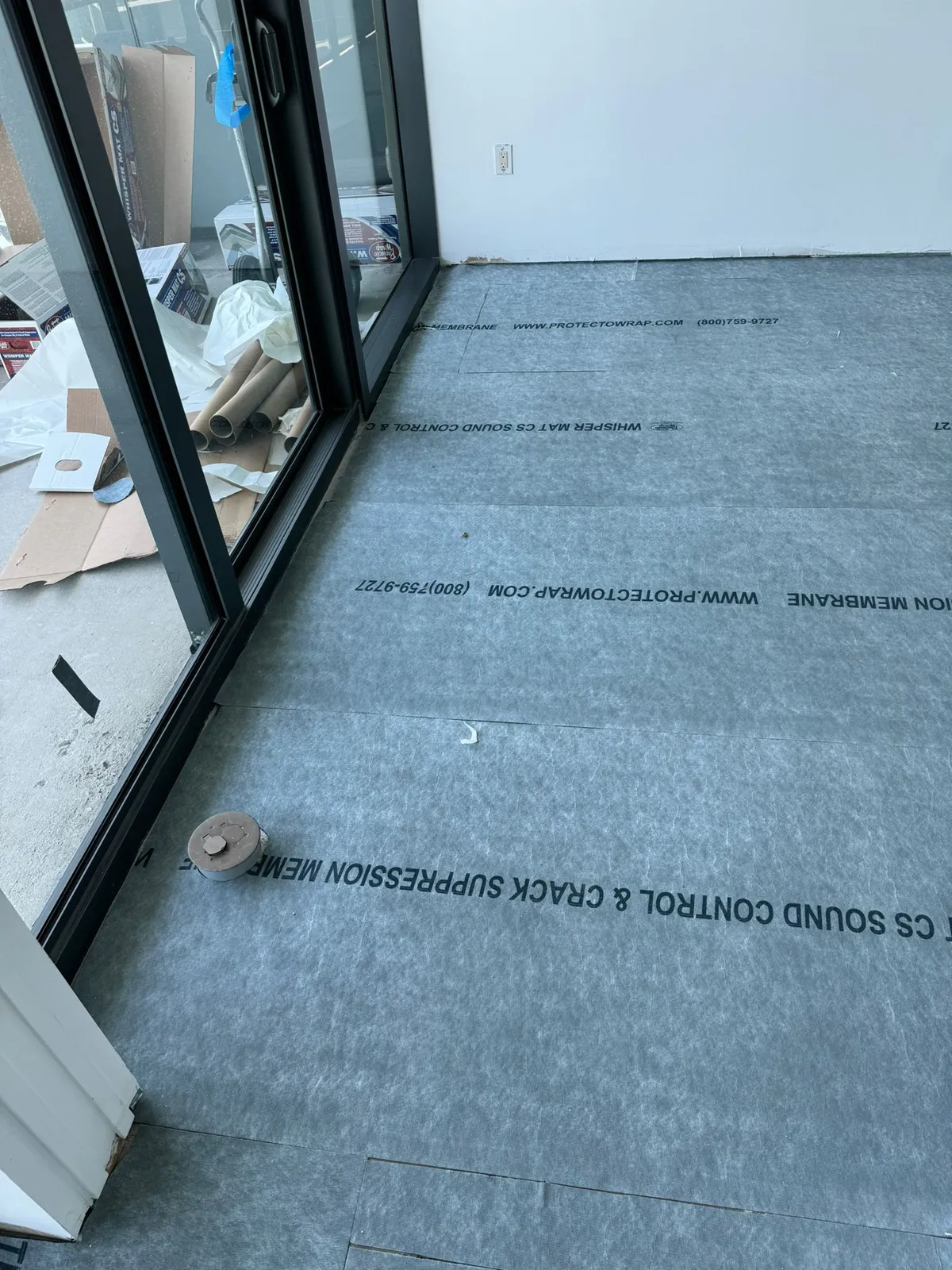
Usually yes, with the right sound and crack isolation membrane underneath and the association's approval.
Does underlayment change the floor height?
Slightly. Thresholds and door clearances are adjusted so transitions stay flush and doors swing freely.
What drives the cost?
The area, the removal of the old floor, slab leveling, the underlayment product and the flooring itself.
Does sound underlayment also help the floor?
Many sound membranes also act as crack isolation, which helps tile and stone resist small movements in the slab. Paired with a level slab, the floor is both quieter and more durable.
How do I pick an underlayment product?
Start with what your building requires and what it has approved before. Many associations keep a list of accepted products or a required performance level, and management can tell you where to find it.
Then match the underlayment to the floor you want. Tile, wood and luxury vinyl each work with specific underlayments, and the flooring manufacturer often limits which ones keep its warranty valid. We present the board with product data for the exact combination being installed.
Do baseboards and walls affect sound?
Yes. Sound travels through any hard connection between the floor and the walls. If tile or wood is pushed tight against the wall, or baseboards are fastened in a way that bridges the gap, part of the underlayment's benefit is lost.
We leave the perimeter isolated as the product instructions call for, and install the base so it does not short-circuit the floor. These details are invisible after installation and they are part of why two floors with the same product perform differently.
What should I tell my neighbors downstairs?
Demolition of an old tile floor is loud, especially in a concrete building. A short note to the neighbors below and next to you, with dates and a contact, makes a big difference. Management may also send notice.
We keep demolition to as few days as possible and follow the building's work hours. Once the new floor is down with the proper underlayment, the neighbors below usually notice the difference in a good way.
What goes wrong with condo floor installations?
Underlayment that does not match what the board approved, flooring installed over an uneven slab so it cracks or clicks, rigid connections at the walls that let sound through and missing documentation when the association asks for proof.
We level the slab, install the approved product as specified, keep the perimeter isolated and give the owner and management the product data and installation photos. That record answers questions if a neighbor ever complains.
How should I compare flooring bids?
Compare the same flooring, the same underlayment product and the same preparation. Leveling the slab, removing the old floor, transitions at doors and new baseboards are often where bids differ.
Ask each bidder to name the underlayment product, not just say it will meet the requirement. If you cannot see the product name, you cannot check it with the board.
How do I take care of the new floor?
Use furniture pads under chairs and heavy pieces, clean with products the flooring manufacturer recommends and wipe water quickly, especially near balcony doors in rain. Salt and sand from the beach act like sandpaper on any finish.
Keep the leftover flooring from the same production run. If a tile cracks or a plank is damaged years later, matching material on hand makes the repair invisible.
Does humidity matter for wood or vinyl floors in Miami?
It does. Concrete slabs hold moisture, and a unit left closed with the air conditioning off can see enough humidity to make wood move and some floors cup or gap. We check the slab before installing and use the moisture protection the flooring manufacturer calls for.
After installation, keeping the air conditioning running, even when the unit is empty, protects the floor. Owners who leave for months should set the unit to control humidity, not turn the system off.