FF BuildersFF Builders
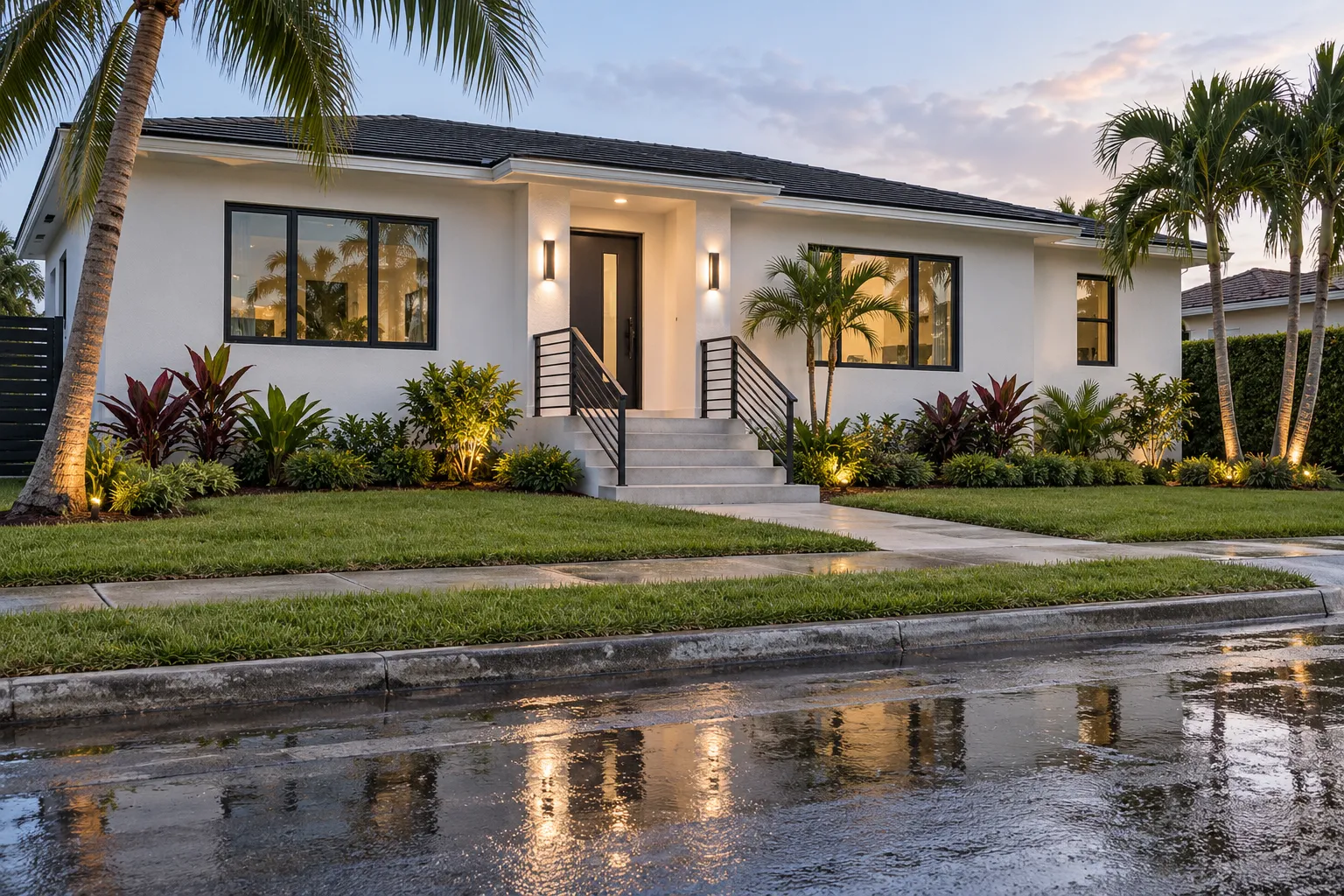
Renovated South Florida house raised above street level with new steps and railing
Substantial improvement · Substantial damage · Flood zones

The FEMA 50% rule
in Miami.

In a flood zone, a big renovation or a big repair can trigger the rule that the whole house must meet today's flood standards. We help you see it coming and plan around it.

Google5.0★★★★★Licensed & insuredPermits includedWritten estimate

Book your in-home visit

Free, no obligation. You don't need to have it all figured out before booking.

Or call now: (786) 744-6185

By submitting, you agree we may call, text or email you about this request. See our Privacy Policy.

5.0 ★★★★★ on GoogleLicensed Florida GCInsured every jobFirm written price

How it works

Know the number before you design.

The rule compares the cost of the work with the value of the building. The visit looks at the house, the scope you want and the flood zone, so you know early whether the project is near the line.

  1. You reach outForm or call. We call back to book a free visit, evenings and Saturdays included.
  2. We look at the house and the scopeThe work you want, the condition of the house and its flood zone.
  3. You get the estimate in writing, within 24 hoursItemized, so the cost that counts toward the rule is clear.
  4. You decideRead it, compare it, call when you are ready. Nothing starts before you sign.

Projects where it comes up

When the rule usually applies.

Large renovations

Whole-home remodels in flood zones.

Additions

New square footage on an older house.

Flood rebuilds

Repairs after a flood that are large compared with the house.

Storm rebuilds

Major repairs after a hurricane.

Foundations

Work under the house when elevation is required.

Teardown and rebuild

When starting new makes more sense.

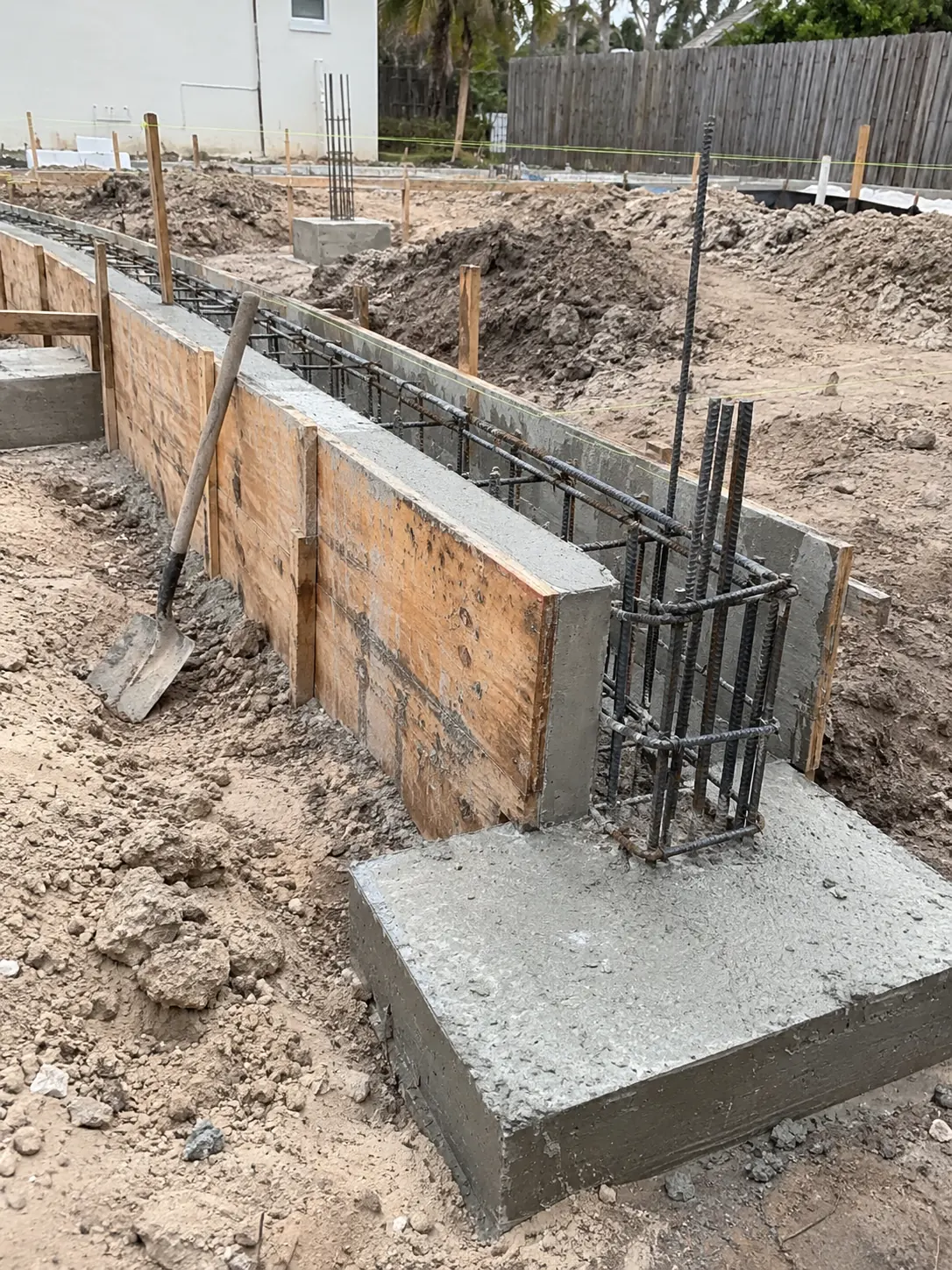
New concrete footing with reinforcing steel during a South Florida home project

What the rule means in practice

Half the building's value
changes the project.

The rule comes from the National Flood Insurance Program and is enforced by the local community. In a special flood hazard area, if the cost of improvements or repairs equals or exceeds 50% of the market value of the building, the project is a substantial improvement or substantial damage, and the whole building must be brought into compliance with current flood requirements.

Compliance most often means the lowest floor has to be at or above the required flood elevation. For many older Miami houses built on a slab at grade, that changes the project completely: elevating, rebuilding, or reshaping the scope.

The value is the building only, not the land. And the cost counts most of the work, labor and materials included. Some communities also add up improvements over several years, so a project split into phases does not always avoid the rule.

None of this is decided by a contractor. The local floodplain office makes the determination. What we do is give you an itemized estimate early, so the conversation with the city and your designer starts with real numbers.

What's in the price

Planned around the rule,
not surprised by it.

What we bring to a project near the 50% line.

  • Early itemized estimate — the cost that counts, line by line
  • Scope options — what changes above and below the line
  • Coordination — with your architect, engineer and the permit process
  • Flood-tolerant materials — for areas below the flood elevation
  • Structural work — foundations and framing when elevation is required
  • Permits and inspections — pulled and closed

The part that separates contractors in flood zones

Find out at permit
and the design is dead.

The worst time to learn about the 50% rule is after the plans are drawn and the permit is submitted. Everything gets redesigned.

Homeowners

Rated 5.0 on Google.

5.0
★★★★★
Google rating · every review, five stars
Google
K Kelsey BarbosaGoogle review Google
★★★★★

We had a great experience using FF Builders. Their team communicated clearly throughout the length of our project. We never had to worry about a single detail. I would highly recommend using them for your project.

S Sasha AbouGoogle review Google
★★★★★

Extremely professional company and very dedicated to their clients! Their work was impeccable and I was very pleased with their services!

G Gabriel BarbosaGoogle review Google
★★★★★

The work they did on our house was fantastic. The crew was efficient with their time and courteous with coming in and out of our home. I will recommend them to all my friends and family! Honest and great people to work with.

S sara bouGoogle review · Local Guide Google
★★★★★

Best service ever! They take care of every detail! Always on time, everything came up as I wanted. Thank you!

D deborah medel-gimenezGoogle review Google
★★★★★

The absolute best! Would definitely recommend 100%!!

M Monica BecharaGoogle review · Local Guide Google
★★★★★

They are the best! Everything was perfect. Super responsible, reliable and always on time. I recommend them 100%.

Google Business Profile rating recorded September 14, 2026. Read them on Google.

Before you build

The 50% rule: questions Miami owners ask

What is substantial improvement?

Any reconstruction, addition or improvement whose cost equals or exceeds 50% of the building's market value before the work. When a project meets that threshold in a special flood hazard area, the whole building must meet current flood requirements.

What is substantial damage?

Damage from any cause, such as a flood, fire or storm, where restoring the building to its condition before the damage would cost 50% or more of its market value. The rule applies to the cost of repair even if the owner chooses not to repair everything.

How is the building's value determined?

Usually from the property appraiser's building value or an independent appraisal of the structure, excluding the land. The local floodplain office decides which value it accepts.

What counts toward the 50%?

Most of the construction cost, labor and materials, including work owners sometimes forget, like electrical, plumbing and finishes. Some items, such as design fees, surveys and landscaping, usually do not count. The local office has the final word.

What can I do if my project is close to the line?

Adjust the scope, phase the work where the community allows it, or plan the project to meet flood requirements from the start. The right answer depends on the house and the goal, which is why the numbers should come before the design.

Who decides whether my project is substantial?

The local floodplain administrator, usually part of the city or county building department. They review the cost of the work against the value of the building and decide whether the project is a substantial improvement or the house is substantially damaged.

The contractor does not make that decision, and neither does the owner. What we do is give the office a complete, itemized estimate so the review is based on real numbers. Ask the floodplain office early, before design, so there are no surprises at permit.

What documents should I prepare?

Most offices ask for a detailed cost estimate of the full project, signed by the contractor, and some form of building value, such as the property appraiser's figure or a private appraisal. Photos and plans help when the work is large.

Requirements vary by jurisdiction, so we confirm with the floodplain office what it wants before submitting. An estimate that leaves items out to stay under the line creates problems later, at inspection or when the office compares it with what was built.

Does the rule apply outside a flood zone?

The substantial improvement and substantial damage rules come from the National Flood Insurance Program and apply to buildings in mapped special flood hazard areas. Many Miami-Dade and Broward neighborhoods are in those zones, and some owners do not know it until they apply for a permit.

Local governments can adopt stricter rules than the federal minimum. The flood zone of your property and the rules that apply to it should be confirmed with the local floodplain office before the project is designed.

What does bringing a house into compliance involve?

In general terms, the building has to meet current floodplain requirements. That can mean raising the lowest floor to the required elevation, or rebuilding, and using flood-resistant materials and flood openings in enclosed areas below that elevation.

Mechanical and electrical equipment like the air handler, the water heater and the electrical panel may also need to sit above it. The exact requirements come from the floodplain office. We build to what it approves and keep the documentation of the finished work.

Before you hire anyone

The ones people actually ask.

Does the 50% rule apply to my house?

It applies to buildings in special flood hazard areas. The local floodplain office determines it for each project.

Does the land value count?

No. The comparison uses the value of the building only.

Does it apply to repairs after a flood?

Yes. Large repairs after damage can trigger it as substantial damage.

Can I split the project to avoid the rule?

Some communities add up improvements over several years. Ask the local office before planning around it.

What happens if the project triggers the rule?

The whole building must meet current flood requirements, which often means elevation.

Can you give me an estimate before I design?

Yes. An itemized estimate early is the best way to see where the project falls.

Do you build elevated homes?

Yes, including foundations and structure, with your architect and engineer.

Are you licensed and insured?

Yes. FF Builders is a Florida Certified General Contractor, licensed and insured.

One contractor

The whole project, one contractor.

FF Builders is a Florida Certified General Contractor working across Miami-Dade and Broward. Design, structure, systems and finishes are one company, one contract and one person on the phone from the first visit to the final inspection.

Flood damage restoration · Home additions · Whole-home remodeling · Foundation repair

Free in-home visit

Plan the project with the rule in mind.

Tell us roughly what you're thinking. We come out, measure, and leave you with a real number. No obligation, and no decision required before you book.

  • A firm written price — material, labor, removal and haul-away.
  • Licensed & insured Florida crews — on every single job.
  • We call you back fast — during business hours, same or next day.

Book your in-home visit

Free, no obligation. Decide after you see the numbers.

Or call now: (786) 744-6185

By submitting, you agree we may call, text or email you about this request. See our Privacy Policy.

Mon–Fri, 8am–6pm ET · Serving Miami-Dade & Broward.