FF BuildersFF Builders
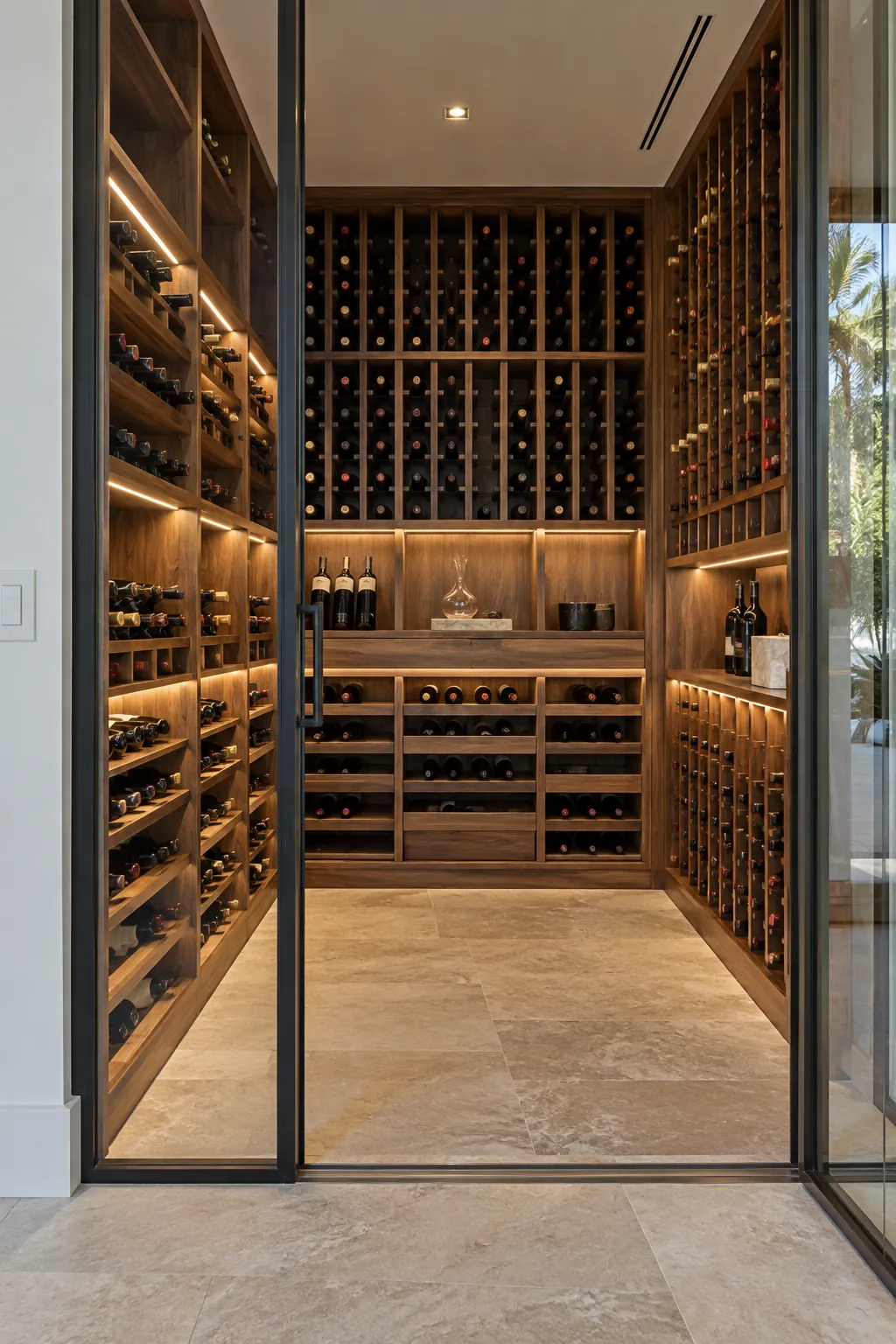
Glass enclosed wine cellar with walnut racks and soft lighting in a Miami home
Glass enclosures · Wood racking · Climate built in

Custom wine cellars
in Miami.

In Miami's heat and humidity, a wine cellar is first a sealed room. We build the room right, insulated and vapor-sealed, then the racking, the glass and the light.

Google5.0★★★★★Licensed & insuredPermits includedWritten estimate

Book your in-home visit

Free, no obligation. You don't need to have it all figured out before booking.

Or call now: (786) 744-6185

By submitting, you agree we may call, text or email you about this request. See our Privacy Policy.

5.0 ★★★★★ on GoogleLicensed Florida GCInsured every jobFirm written price

How it works

The room decides how the wine ages.

A beautiful cellar in a room that is not sealed fights Miami's humidity every day. The visit studies the space, the walls and where the cooling can go before any design.

  1. You reach outForm or call. We call back to book a free visit, evenings and Saturdays included.
  2. We study the spaceSize, the walls around it, light, where cooling can vent, and the bottle count you want.
  3. You get the estimate in writing, within 24 hoursInsulation, vapor barrier, door, racking, floor, lighting and cooling.
  4. You decideRead it, compare it, call when you are ready. Nothing starts before you sign.

What we build

The cellar and the room around it.

Glass enclosures

Glass walls and doors so the collection is on display.

Wood racking

Walnut, mahogany or oak racking built to the room.

Insulation and vapor barrier

The room sealed for Miami's climate.

Stone and tile floors

Floors that hold the temperature.

Lighting

LED lighting that does not heat the bottles.

Wine rooms and bars

Tasting areas and bars next to the cellar.

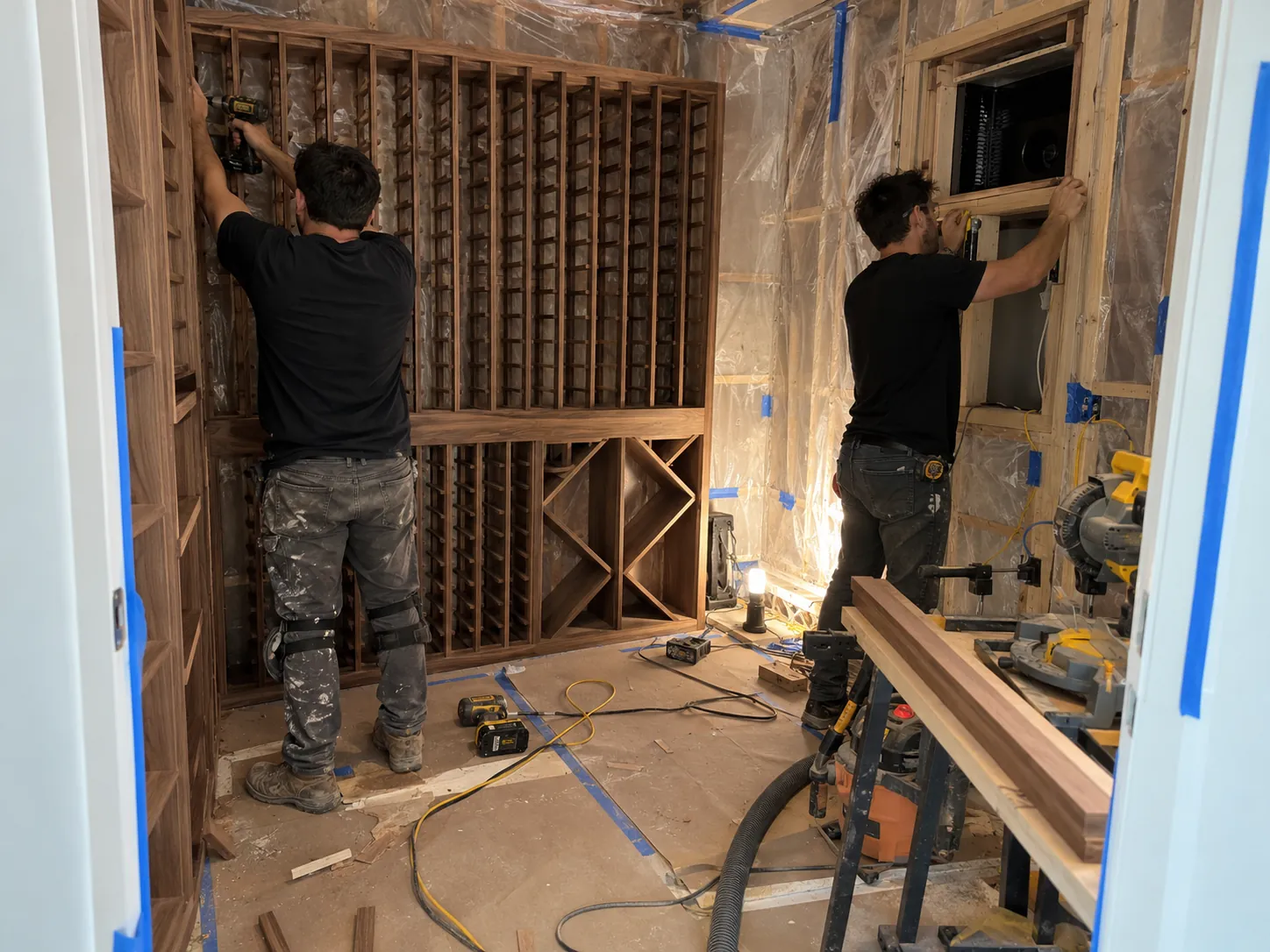
Crew installing wood wine racking inside an insulated cellar room

What changes in Miami

Humidity is the enemy
you cannot see.

Outside air in Miami is hot and humid most of the year. A cellar kept cool without a proper vapor barrier pulls that moisture into the walls, where it condenses, stains and grows mold. The room is sealed before the first rack goes in.

The walls and ceiling are insulated well beyond a normal room, the door is sealed, and the cooling is sized for the room and the glass, with a place to vent its heat.

Glass enclosures are what most Miami homeowners want: the collection becomes part of the living space. Glass needs the right insulation strategy and placement away from direct sun, which is planned from the start.

Racking, floor and lighting are the finish: wood built to the walls, stone floors that hold temperature, and LED lighting that shows the bottles without heating them.

What's in the price

The cellar,
from the walls in.

Construction and finish in one contract.

  • Framing and insulation — walls and ceiling built for a cold room
  • Vapor barrier — continuous, on the warm side
  • Door and glass — sealed enclosure
  • Cooling — sized for the room, installed as part of the job
  • Racking — built to the room and the collection
  • Floor and lighting — stone or tile, LED lighting

The part that separates cellar builders

Racks are the easy part.
The room is the cellar.

Most cellar failures are construction failures: no vapor barrier, thin insulation, a door that does not seal. In Miami they show up within a year.

Homeowners

Rated 5.0 on Google.

5.0
★★★★★
Google rating · every review, five stars
Google
K Kelsey BarbosaGoogle review Google
★★★★★

We had a great experience using FF Builders. Their team communicated clearly throughout the length of our project. We never had to worry about a single detail. I would highly recommend using them for your project.

S Sasha AbouGoogle review Google
★★★★★

Extremely professional company and very dedicated to their clients! Their work was impeccable and I was very pleased with their services!

G Gabriel BarbosaGoogle review Google
★★★★★

The work they did on our house was fantastic. The crew was efficient with their time and courteous with coming in and out of our home. I will recommend them to all my friends and family! Honest and great people to work with.

S sara bouGoogle review · Local Guide Google
★★★★★

Best service ever! They take care of every detail! Always on time, everything came up as I wanted. Thank you!

D deborah medel-gimenezGoogle review Google
★★★★★

The absolute best! Would definitely recommend 100%!!

M Monica BecharaGoogle review · Local Guide Google
★★★★★

They are the best! Everything was perfect. Super responsible, reliable and always on time. I recommend them 100%.

Google Business Profile rating recorded September 14, 2026. Read them on Google.

Before you build

Custom wine cellars in Miami: what to know before you build

What affects the cost of a wine cellar?

The size and bottle count, glass versus solid walls, the racking material and design, the cooling system, the floor and the lighting. The construction of the room, insulation and vapor barrier, is a smaller share of the cost but decides whether the cellar works.

Why does Miami need a vapor barrier?

Because the air outside the cellar is hot and humid while the inside is kept cool. Without a continuous vapor barrier on the warm side, moisture moves into the walls and condenses. That is how cellars grow mold and stain behind the racking.

Glass cellars: what changes?

Glass lets the collection become part of the house, which is why it is so popular. Glass insulates less than a wall, so the cooling is sized for it, the glass specification is chosen carefully, and the cellar is placed away from direct sun.

Which racking works best?

Wood racking in walnut, mahogany or oak is the classic look; metal and cable systems feel more modern. The layout mixes single bottles, display rows and case storage according to how you collect.

Can any room become a cellar?

Most interior rooms can: closets, under-stair spaces, spare rooms, even part of a living room behind glass. Interior locations are easier to keep cool than rooms on an exterior wall.

How is a wine cellar cooled?

A cellar needs a dedicated cooling unit that holds both temperature and humidity steady. A regular air conditioner dries the air and cycles too often, which is bad for corks and labels. The main options are self-contained units through a wall, ducted systems that keep the equipment in another room, and split systems with the condenser outside.

The right one depends on noise, where the heat can be exhausted and how the cellar looks. In Miami, the cooling unit works hard all year, so it has to be sized for the room, the glass and the heat around it.

Which door should a wine cellar have?

The door is the weakest point of the insulation. It needs a tight seal on all sides, a threshold at the bottom and, if it is glass, insulated glass so it does not sweat. A door that leaks lets warm, humid Miami air in every hour, and the cooling unit runs constantly to compensate.

Solid wood doors with weather stripping suit traditional cellars. Glass doors in steel or aluminum frames suit modern designs. In both cases we install the door as part of the cellar's sealed envelope.

How should a wine cellar be lit?

Wine is sensitive to heat and light, so cellar lighting should be cool running and on a separate switch or timer. LED strips behind racking, small recessed lights and lit display shelves are the common choices. Avoid fixtures that produce heat near the bottles.

Lighting is also what makes a glass cellar look finished at night. We plan it with the racking design so every light hits the labels, not the eyes.

What maintenance does a wine cellar need?

Very little, if it was built correctly. The cooling unit needs its filters and coils cleaned on a regular schedule, and its condensate drain checked so it never backs up. Door seals should be inspected each year and replaced when they flatten.

A small temperature and humidity monitor inside the cellar is a good habit. If readings start to drift, it usually means a seal, a filter or the cooling unit needs attention, long before the wine suffers.

Before you hire anyone

The ones people actually ask.

Can you build a wine cellar in a Miami home?

Yes. The room is insulated and vapor-sealed for the climate, then finished with racking, glass and lighting.

Do I need a special room?

No. Closets, under-stair spaces and spare rooms can become cellars when they are built right.

Glass or solid walls?

Glass shows the collection; solid walls hold temperature better. We design around both.

How many bottles can it hold?

It depends on the room and the racking. We design to the collection you have and want.

How long does it take?

It depends on size and finishes. You get a timeline in writing with the estimate.

What temperature should a cellar keep?

Most collectors keep cellars cool and stable with moderate humidity. The cooling system is chosen for that and for the size of the room.

Can you add a tasting area?

Yes. Bars, counters and seating can be built next to the cellar.

Are you licensed and insured?

Yes. FF Builders is a Florida Certified General Contractor, licensed and insured.

One contractor

The whole project, one contractor.

FF Builders is a Florida Certified General Contractor working across Miami-Dade and Broward. Design, structure, systems and finishes are one company, one contract and one person on the phone from the first visit to the final inspection.

Luxury home renovation · Custom millwork · Home theaters · Marble and stone

Free in-home visit

Your cellar, built for Miami's climate.

Tell us roughly what you're thinking. We come out, measure, and leave you with a real number. No obligation, and no decision required before you book.

  • A firm written price — material, labor, removal and haul-away.
  • Licensed & insured Florida crews — on every single job.
  • We call you back fast — during business hours, same or next day.

Book your in-home visit

Free, no obligation. Decide after you see the numbers.

Or call now: (786) 744-6185

By submitting, you agree we may call, text or email you about this request. See our Privacy Policy.

Mon–Fri, 8am–6pm ET · Serving Miami-Dade & Broward.